A recurring Enhanced Recovery Company problem is more specific than repeated calls: the collector may be trying to reach another person about a telecom or cable account connected to your phone number.
That can happen when a number is reassigned, creditor records are outdated, or a data-matching process links the wrong number to the debtor.
At Consumer Rights Law Firm PLLC, an ERC wrong-party file would start with the original creditor’s account data, the consumer’s phone-number history, call logs, and the first wrong-number notice. We would then identify when the mismatch entered the account and whether calls continued after the collector received notice.
Why Is The Collector Calling Me About Someone Else’s Phone Or Cable Account?
ERC historically collected telecommunications and cable accounts for creditors, and federal cases show that a phone number can remain connected to a debtor after the number belongs to someone else.
A published Seventh Circuit case involving ERC concerned AT&T customers whose former numbers had later been reassigned to unrelated consumers. Another verified federal ERC case involved a data process associating a consumer’s number with another person’s T-Mobile debt.
What Should I Do If I Already Said They Have The Wrong Number?
Document exactly when the collector was told it had the wrong person and what calls occurred afterward.
A verified federal ERC case involved 21 calls concerning another person’s AT&T debt and a factual dispute over whether calls continued after the collector allegedly learned it had reached the wrong person.
For this type of file, we would compare call screenshots and written notices with account notes, recordings, IVR records, and any number-suppression entry. The next step is dividing the call history into calls before notice and calls after documented notice.
Why Does My Phone Or Cable Balance Not Match What The Collector Says I Owe?
The balance may differ because of final service charges, device financing, equipment returns, cancellations, or credits recorded by the original provider.
ERC said it operated as a third-party collector and did not own the debts it serviced.
For a disputed telecom balance, we would reconstruct the provider’s final ledger and compare device payments, equipment returns, cancellation dates, and credits with the amount placed for collection. That helps identify whether the mismatch began with the creditor’s records or later collection handling.
Does The Collector Own My Debt?
ERC’s historical materials stated that it did not own the debts it serviced and instead collected for creditors or debt purchasers.
A direct contract with ERC is not the key question. Check whether the original account is yours, the balance is correct, and the collector had servicing authority.
Is The Same Company Still Handling My Account?
Current collection authority should be confirmed because TrueML acquired ERC’s debt collection business in October 2022.
The legacy Florida Enhanced Recovery Company, LLC registration later became inactive. An old letter, web page, account reference, or credit-report entry therefore does not by itself establish who should receive payment today.
Before discussing settlement, we would compare the newest creditor records, recall history, successor notices, and current payment instructions. The next step is confirming which entity presently controls the account before money or dispute correspondence is sent.
Why Do Wrong-Party And Account Complaints Keep Appearing?
The pattern can repeat because telecom collection files depend on phone numbers, service records, account identifiers, and data that can become stale or mismatched.
BBB complaints included unfamiliar accounts, telecom balance disputes, documentation problems, credit-reporting concerns, and consumers saying debts were not theirs. BBB listed the business as Not Rated and not accredited before the profile became unavailable, and identified it as out of business. Complaint material included entries through 2024.
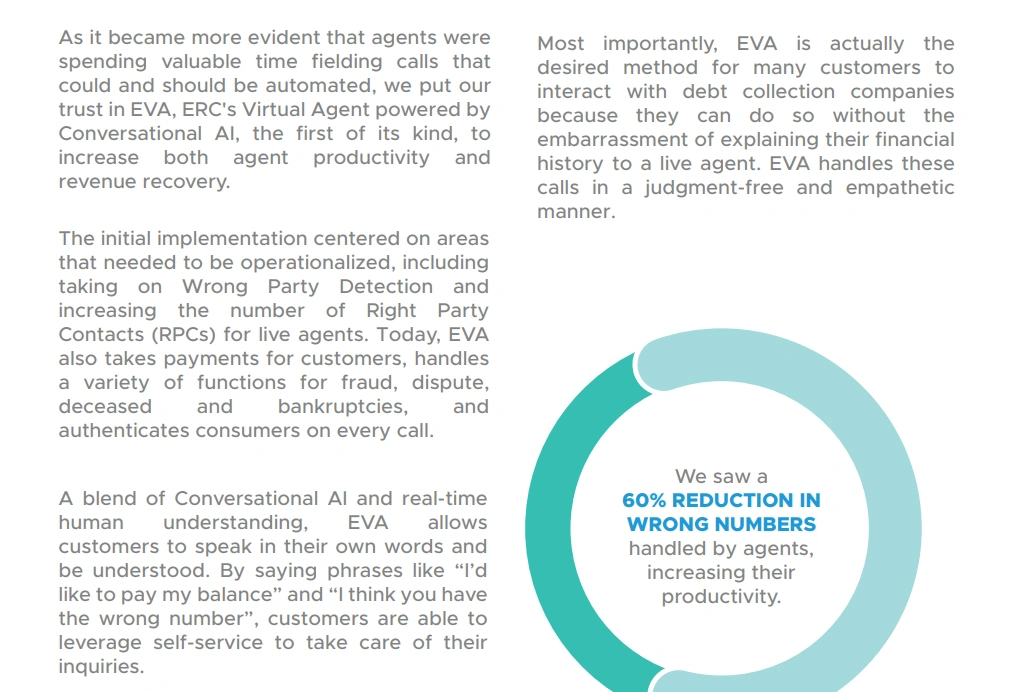
Source: ERC, How ERC Drove Digital Transformation to Improve Collections With EVA, ERC’s Virtual Agent
For a wrong-party complaint, we would separate the creditor’s account identity, the source of the phone number, the consumer’s first notice, and later call history. That helps distinguish number reassignment, identity theft, creditor data problems, and collector-side handling.
What Does Soppet Mean If The Collector Is Calling The Wrong Person?
Soppet v. Enhanced Recovery Co., LLC shows why the current subscriber and phone-number history can matter when collection calls target a number previously used by the debtor.
The Seventh Circuit addressed automated collection calls to numbers reassigned from AT&T customers to unrelated consumers and rejected the argument that the former subscribers’ consent automatically covered the current subscribers.
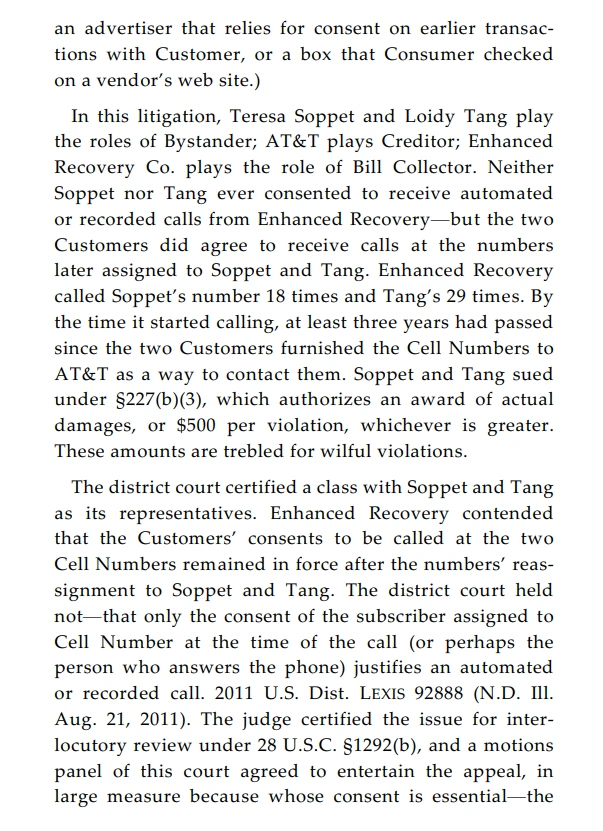
Source: Soppet v. Enhanced Recovery Company, LLC, No. 11-3819
SourceCourtListener record for Soppet
We would use Soppet as an evidence lesson, not as proof that every ERC call was unlawful. Subscriber identity, call timing, consent, wrong-party notice, recordings, account notes, and suppression records still have to be matched to the consumer’s facts.
What Evidence Should I Save Before Responding?
Save records showing both why the account may be wrong and what happened after you told the collector.
| Record | What It Can Show |
| Carrier call history | Dates and frequency of calls |
| Subscriber records | When you obtained the phone number |
| Original creditor statements | Whose account and balance are involved |
| Written wrong-number notice | When notice was given |
| Fraud records | Whether identity theft was formally reported |
How Can I Contact The Company About My Account?
Legacy ERC materials list the following contact information, but current account authority should be confirmed before sending payment.
| Item | Details |
| Historical collection/dispute phone | 800-383-5979 |
| Historical relationship/dispute phone | 800-507-0052 |
| Historical payment mailing address | P.O. Box 23870, Jacksonville, FL 32241-3870 |
| Historical principal address | 8014 Bayberry Road, Jacksonville, FL 32256 |
| Website | ercglobalcx.com |
How Can Consumer Rights Law Firm PLLC Help With A Wrong-Party Or Telecom Collection Dispute?
Consumer Rights Law Firm PLLC can evaluate whether the creditor account, phone-number history, call records, payment history, and credit reporting tell the same story.
We would build separate timelines for the underlying telecom account and the calls, then determine whether the problem points to creditor data, a reassigned number, identity theft, handling after notice, or a later account transfer. That record-first approach helps avoid paying, disputing, or contacting the wrong entity.
| Contact | Details |
| Phone | 877-700-5790 |
| help@consumerlawfirmcenter.com | |
| Website | consumerlawfirmcenter.com |
| Office | 133 Main Street, Second Floor, North Andover, MA 01845 |
| Fax | 844-636-9909 |
| Better Business Bureau | CRLF Better Business Bureau Profile |
Success Stories
They were a God sent to me. I was receiving about 17 calls a day being harassed by creditors. Not only did they get the calls stopped but they also got my debt settled as paid in full.
I am so grateful that I made that one phone call to Matthew Gazda. He was so professional and kind. He handled everything so quickly I’m still in shock. Thank you Matthew Gazda for your kindness, help and professionalism. I wish you all the best. If you are in need of a great attorney he’s your guy.
Derek DePetrillo is an amazing attorney! I was skeptical at first, not hopeful my case would have enough to get it settled. Right before the new year I received a call from Matt, who is also a fantastic employee of the firm, with news that my debt was waived and attorney fees were paid by the creditor. Stop receiving collection calls and MAKE the call to Consumer Rights Law Firm PLLC to get your debt resolved!
I’m also happy that the loan company stopped calling me after they kept threatening my family & me. Again thank you very much for all the help until my case was done.
What Questions Matter Most In An ERC Dispute?
The most useful questions focus on why the account or phone number was connected to you and what happened after you challenged it.
Why am I being called about someone else’s debt?
An old, reassigned, or incorrectly matched telephone number may have been connected to the debtor’s account.
What if I already reported the wrong number?
Preserve the date of that notice and compare it with any calls that occurred afterward.
Does ERC own my debt?
ERC stated that it did not own the debts it serviced and instead collected for creditors or debt purchasers.
Why is my AT&T or T-Mobile balance different?
Compare the provider’s final ledger, device charges, credits, and cancellation history with the collection balance.
What if my Spectrum or cable equipment was returned?
Keep the return receipt and compare it with the provider’s final account ledger.
What if the account was opened through identity theft?
Preserve the creditor’s fraud records and the date the collector received notice of the identity-theft claim.
Who handles legacy ERC accounts after the TrueML acquisition?
Account control must be confirmed individually because TrueML acquired ERC’s debt collection business in 2022.
What if an old ERC letter still tells me where to pay?
Verify the current collector with the creditor before using legacy payment instructions.
Why is the account still on my credit report after payment?
Compare the payment date, account closure or recall date, and later credit-report updates.
What records matter most in a wrong-number dispute?
Subscriber history, creditor account data, call logs, recordings, and the first documented wrong-party notice are especially important.