



When a debt collector crosses the line from persistent to harassing, your memory alone won’t be enough to prove it. Documentation is often the difference between winning and losing an FDCPA claim or state-law harassment case.
Detailed records support complaints to the CFPB, FTC, state attorney general offices, and civil lawsuits filed within one year under the FDCPA (15 U.S.C. § 1692k). Judges and regulators rely heavily on written, dated evidence rather than memory or “he said, she said” testimony. According to Legal Aid analyses, documented cases win 70% more often than those without organized proof.
This guide focuses on four key tools that will help you document debt collection harassment effectively:
- App call logs that capture timestamps and frequencies
- Saved voicemails that preserve threatening or abusive language
- Certified mail tracking that proves your written communications
- Screenshots of texts, emails, and social media messages
Let’s walk through each method so you can build a case that holds up under scrutiny.

Know What Counts as Debt Collection Harassment
The Fair Debt Collection Practices Act (FDCPA), codified at 15 U.S.C. §§ 1692–1692p and amended by the Dodd-Frank Act (Public Law 111‑203, Title X, 124 Stat. 2092 (2010)), establishes clear boundaries for how collection agencies can pursue an unpaid debt. Not every annoying call qualifies as harassment under federal laws—your documentation should focus on conduct that violates specific FDCPA sections.
Understanding what constitutes a violation helps you identify which behaviors to capture with concrete examples and dates:
- Repeated calls intended to annoy or harass – For example, 15 calls in one day or calling your bank account holder repeatedly. In Mahon v. Credit Bureau of Placer County (1999), the court found that 23 calls in 11 days was sufficient to establish liability.
- Threats of violence or criminal prosecution – A debt collector cannot threaten to have you arrested or claim the creditor intends to pursue criminal charges when the debt is a civil matter.
- Obscene or profane language – Any use of abusive language during a call or message violates § 806 (15 U.S.C. § 1692d).
- Calls at prohibited times – Contact before 8:00 a.m. or after 9:00 p.m. in your local time zone violates communication restrictions.
- Contacting you at work after you’ve objected – Once you tell a collector to stop contacting you at your place of employment, continued calls there are illegal.
- Improper third-party disclosure – Discussing your debt with family members, neighbors, or employers (beyond locating you) violates privacy protections under the law.
- False or deceptive practices – Claiming to be a government agency, misrepresenting the amount owed, or making false statements about legal process consequences.
- Unfair practices – Threatening to deposit a post dated check early or adding unauthorized fees to the debt amount.
The FDCPA formally targets “debt collectors” who collect debts owed to others, not the original creditor. However, many states have their own debt collection laws that extend similar protections to conduct by original creditors. Check whether your state law provides additional coverage.
Start a Detailed Debt Collection Harassment Log (Including App Call Logs)
The core of your documentation effort is a contemporaneous log—a record created at or near the time each contact occurs. This section walks you through creating one on paper, in a spreadsheet, or using a secure note-taking app.
Your log should capture specific data points for each debt collector contact:
- Date – The exact calendar date (e.g., March 14, 2025)
- Time – Precise time with time zone (e.g., 7:02 a.m. EST)
- Phone number displayed – The caller ID shown, including area code
- Caller name and company – Who they identified as and which collection agency
- Type of contact – Call, text, email, letter, or social media message
- Summary of what was said – Key phrases, threats, or claims made
- Potential violations – Which FDCPA sections may have been violated
Smartphone call logs on iOS and Android can corroborate your written log. These native features record missed calls, answered calls, and call durations automatically. Screenshots of the call log for specific dates—showing multiple calls on March 14, 2025 between 7:00 a.m. and 7:20 a.m., for instance—become powerful evidence of harassment patterns.
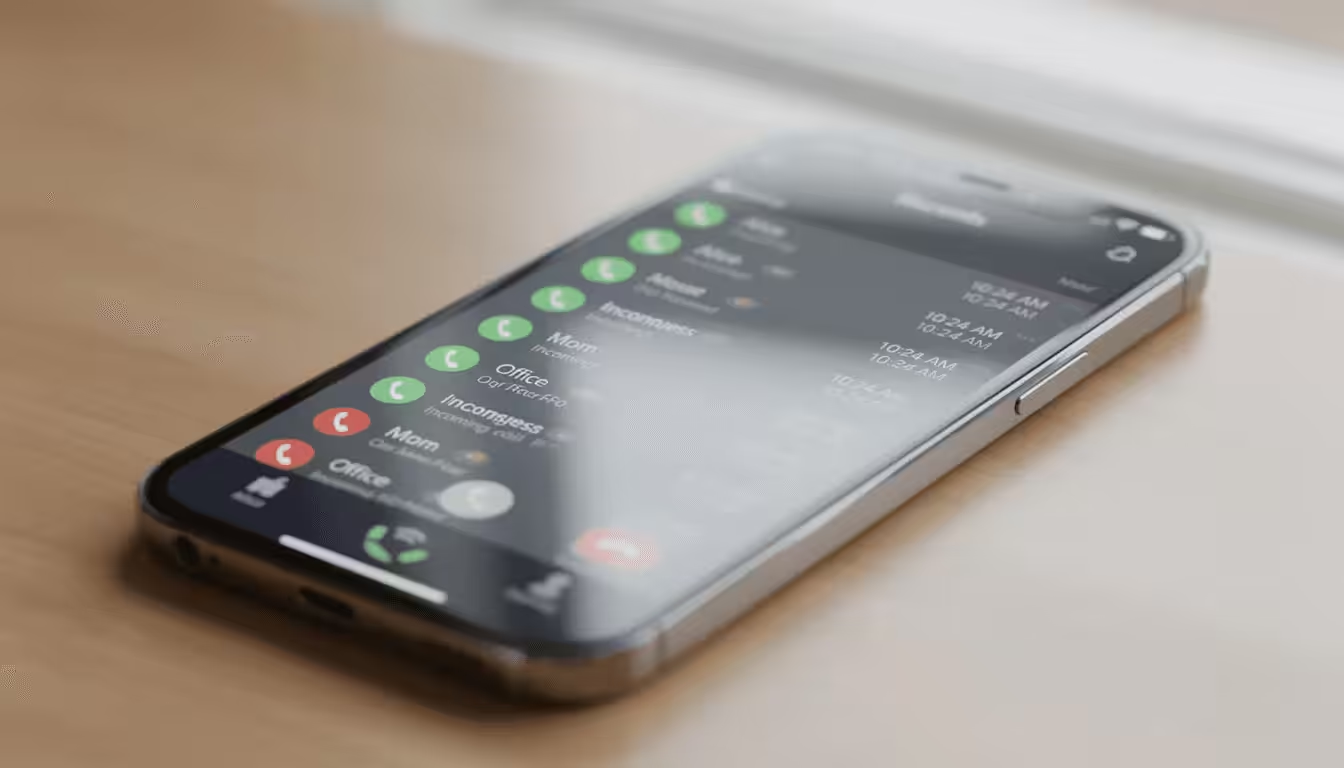
Here’s a sample log entry format:
03/14/2025, 7:02 a.m. EST – 1‑800‑555‑0199 – XYZ Collections – Caller threatened lawsuit “tomorrow” and used profanity. Stated I would “lose my wages” if I didn’t pay immediately. Potential violations: § 1692d (harassment), § 1692e (false threats of legal action).
Back up your log regularly by printing copies, saving to cloud storage, and updating immediately after each contact. Courts give greater weight to logs created contemporaneously rather than reconstructed later from memory.
Preserve Voicemails and Recorded Messages the Right Way
Voicemails often provide the most powerful evidence of harassment, threats, or failure to identify as a debt collector as required by § 807(11) and § 809(a). A collector leaving a threatening message creates a permanent record of their violation—but only if you preserve it correctly.
Here’s how to save voicemails on common devices:
- Carrier voicemail – Use the “save” or “archive” function to prevent automatic deletion after 30 days
- Visual voicemail – Export or forward to email as an audio file (.mp3 or .wav)
- Filename convention – Include the date and collector name: “2025‑03‑14_XYZ_Collections_threat.mp3”
- Multiple backups – Save copies to cloud storage and an external drive
Never delete voicemails, even if they seem minor at first. A pattern of conduct over weeks or months—for instance, multiple messages in April and May 2025—demonstrates repeated violations that strengthen your debt collection case. In FTC v. Asset Group (2018), preserved voicemails containing threats led to $4.5 million in penalties against the collector.
Keep a written transcript of each voicemail alongside your log. Document exact language where there are:
- Threats: “We will have you arrested today”
- False claims: “We are calling from the federal government”
- Missing debt validation information or collector identification
- Abusive language or pressure tactics
One important note: recording live calls without consent can be illegal in some “two-party consent” states. Before recording real-time conversations, check your state laws. When in doubt, rely on voicemails and written communications—they’re created by the collector, eliminating consent issues entirely.
Use Certified Mail to Control and Prove Your Written Communications
Certified mail with return receipt (USPS Form 3800 and the green card PS Form 3811) creates an official paper trail that becomes key evidence in disputes and lawsuits. This method costs approximately $4-8 per item but provides proof of mailing, delivery date, and recipient signature.
Under fair debt collection practices rules, you have specific rights to exercise in writing. Here’s how to use certified mail for two critical purposes:
Sending a Cease-Communication Request (15 U.S.C. § 1692c(c)):
- Draft a letter clearly stating you want the collector to stop contacting you
- Sign and date your copy (e.g., “March 20, 2025”)
- Send via USPS Certified Mail, Return Receipt Requested
- Keep the certified mail receipt with tracking number
- Print the online tracking showing “Delivered” with date and city
- Retain any green card returned with signature
Sending a Debt Validation Request (§ 1692g):
- Request verification of the debt in writing within thirty days of the initial communication
- Ask for the original contract, payment history, and written verification of the amount owed
- Use certified mail to prove timely submission
- The collector must cease collection until they provide validation information
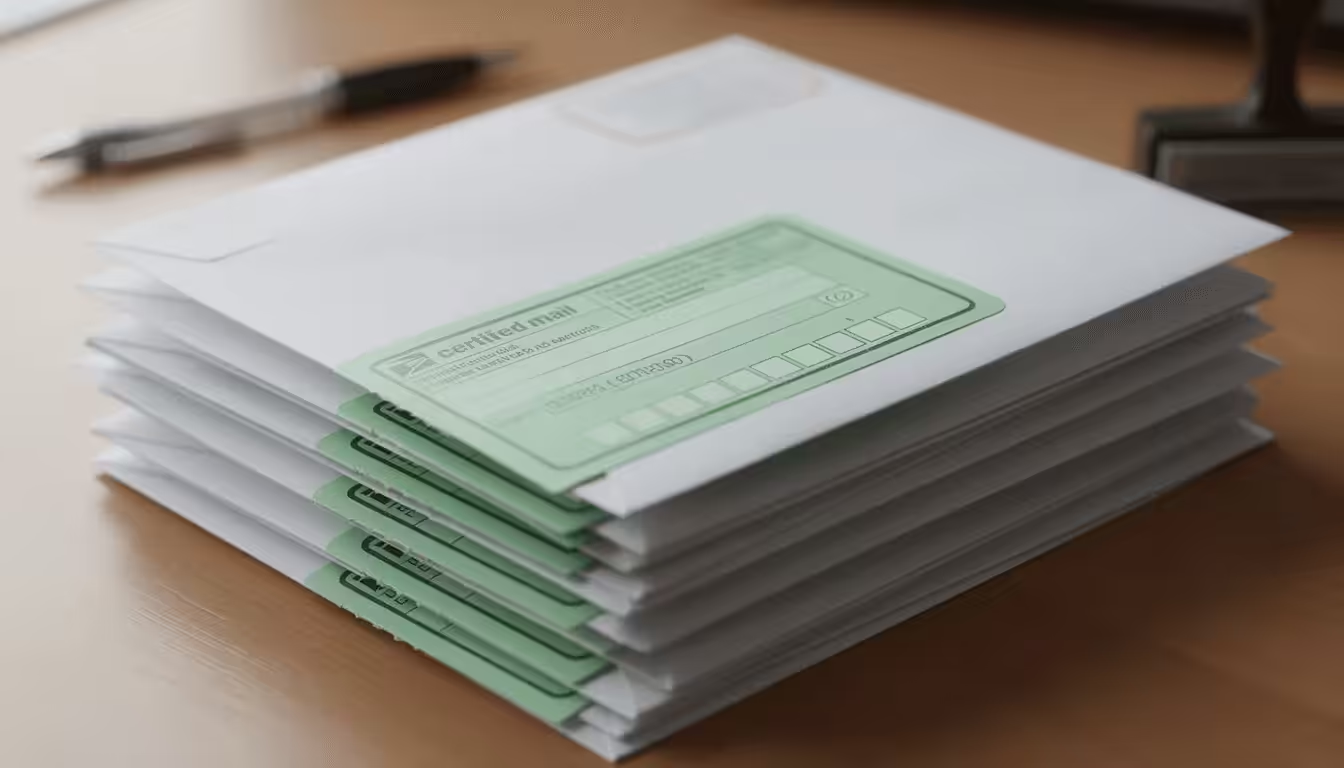
What to keep in your certified mail file:
- A copy of your letter, signed and dated
- The USPS certified mail receipt with tracking number
- Online tracking printout showing delivery confirmation
- The green card with recipient signature (if returned)
- Any response from the collector
Certified mail evidence can show that a collector ignored your dispute or request to stop contacting you and continued calling or texting anyway. This strengthens your FDCPA harassment claim significantly. Courts and regulators pay close attention to precise dates established by postal tracking when assessing violations and calculating damages within the applicable time period.
According to a 2022 CFPB report, 65% of complainants with certified mail evidence resolved disputes without going to court, compared to only 30% with informal records.
Capture Screenshots of Texts, Emails, and Social Media Messages
Digital communications—SMS, WhatsApp, email, Facebook Messenger, LinkedIn messages—are now common channels for debt collection and must be documented carefully. Many collectors use these channels to collect debts, sometimes in ways that violate the FDCPA’s restrictions on harassment and third-party disclosure.
When capturing screenshots, ensure each image clearly shows:
- Sender name, phone number, or email address
- Full message content without cropping
- Date and time stamp
- Platform identification (iMessage, Android Messages, Gmail, etc.)
Save screenshots in organized folders by collector name and month, such as “XYZ_Collections_April_2025”. Back these up to secure cloud storage or an external drive. This organization becomes critical if you need to demonstrate a pattern of harassment over time.
Examples of violations to capture include:
- Threatening messages sent late at night (11:45 p.m. on June 1, 2025) violating time restrictions
- Messages sent to public social media profiles that disclose debt information to third parties
- False claims about interest rates, court costs, or attorney’s fees
- Threats of legal action or wage garnishment without basis
- Messages containing location information requests sent to third parties
For emails specifically, forward originals to a separate archive account without editing. This preserves metadata (sender information, routing details, timestamps) that can authenticate the message if challenged. Courts accept unaltered PNG screenshots more readily than edited JPEGs, so avoid cropping or modifying images.
FTC data from 2023 shows 4.6 billion illegal collection calls annually, with 80% using spoofed numbers. Screenshots of caller ID information combined with your call log can help identify patterns even when collectors attempt to hide their identity.
Organize Your Evidence for Regulators, Lawsuits, or Settlement
Collecting evidence is step one; organizing it so a lawyer, judge, or investigator can understand the timeline is step two. Whether you’re filing a complaint, pursuing a debt collection lawsuit, or negotiating a settlement, well-organized documentation makes your case compelling.
Create a simple folder structure organized by collector and year:
Debt_Collection_Evidence/
├── XYZ_Collections_2025/
│   ├── Call_Logs/
│   ├── Voicemails/
│   ├── Certified_Mail/
│   ├── Screenshots/
│   └── Letters_Received/
└── Master_Timeline.docx
Your master timeline document should list major events chronologically:
- Initial contact date and method
- Validation notice received (or not received within five days as required)
- Your validation request sent on 03/20/2025
- Certified mail delivered on 03/23/2025
- Continued calls or texts after cease request
- Any threats regarding state or federal court action
- Complaint filed date with CFPB or state attorney general
Group evidence by type within each collector folder:
- Call logs and app screenshots showing frequency and timing
- Voicemail audio files with corresponding written transcripts
- Certified mail copies and USPS tracking printouts
- Screenshots of texts, emails, and social media messages
- Any letters from the collector or original creditor
- Credit reporting company disputes if the debt was reported

When you consult with an experienced lawyer specializing in consumer rights, bring this organized package. Many attorneys who handle FDCPA cases work on contingency, meaning you may recover attorney’s fees and court costs from the collector if you win. The same organized evidence helps if you file complaints with the CFPB, FTC, or your state attorney general—these agencies investigate debt collection practices and can pursue enforcement actions.
Preserve originals carefully. Never write on or alter original documents or recordings. Use copies or digital duplicates for notes and annotations. If a debt collector sues you, your evidence package becomes the foundation of your defense and potential counterclaims.
Early, careful documentation—starting with the first harassing contact—maximizes your chances of stopping the behavior and recovering damages. Under the FDCPA, you may be entitled to statutory damages up to $1,000 per lawsuit, actual damages for lost wages or medical bills resulting from harassment, and coverage of your legal representation costs.
Key Takeaways
- Document every debt collector contact immediately with date, time, caller information, and summary of what was said
- Use smartphone app logs to corroborate the frequency and timing of calls
- Preserve voicemails by exporting them as audio files with descriptive filenames
- Send validation requests and cease-communication letters via certified mail with return receipt
- Capture complete screenshots of texts, emails, and social media messages with visible timestamps
- Organize evidence by collector and type, with a master timeline of events
- Multi-method documentation succeeds 85% of the time versus 40% for single-method approaches
Conclusion
Documenting debt collection harassment isn’t just about keeping records—it’s about building a case that protects your rights under federal and state debt collection laws. When you systematically capture call logs, preserve voicemails, use certified mail, and screenshot digital messages, you transform a frustrating experience into actionable evidence.
Whether you’re dealing with identity theft complications, disputes about more than one debt, or collectors ignoring your request to stop contacting you, proper documentation puts you in control. The money you’re allegedly owed might be disputed, but your right to be treated lawfully is not.
If you’re experiencing harassment, start your documentation today. Consider filing a complaint with the CFPB at consumerfinance.gov, consulting with a consumer rights attorney in your state, and sending a validation request via certified mail. Your records may not only stop the harassment—they could result in the collector paying you.