




You check your credit report expecting smooth sailing, and there it is—a collection account you never saw coming. No warning letter. No heads-up phone call. Just a sudden score drop that threatens your plans for a new apartment, car, or mortgage.
This scenario happens more often than most people realize. Debt collectors operate under specific rules, but those rules don’t always require them to give you advance notice before reporting to credit bureaus. Understanding how debt collection works, what collectors must and must not do, and how to protect yourself can mean the difference between a minor financial setback and years of credit damage.
In this guide, you’ll learn exactly how collections affect your credit score, what legal protections you have under fair debt collection practices laws, and what strategies you can use to minimize damage before and after a collection hits your report.
Does Debt Collection Affect Your Credit Score?
Yes—third party collections can significantly lower your credit score once reported, especially during the first one to two years after they appear. The damage can be substantial, sometimes dropping a previously strong score by 100 points or more.
Here’s the critical point many consumers miss: a collection cannot impact your credit score until it is actually reported to at least one major credit bureau (Experian, Equifax, or TransUnion). The debt itself doesn’t hurt you. The reporting does.
Under the Fair Credit Reporting Act (FCRA), a collection account can remain on your credit report for up to seven years from the original delinquency date. This is the date of the first missed payment that was never brought current—not when the collector bought the debt or started contacting you.
The seven-year clock starts ticking from your first delinquency, regardless of how many times the debt changes hands.
Different credit scoring models treat collections differently. Newer FICO and VantageScore models handle medical collections and paid collections more favorably than older versions. Many newer credit scoring models ignore paid collections altogether, which can significantly benefit consumers who settle their debts.
Some small-dollar medical collections under specific thresholds may never appear on your report at all due to recent industry policy changes. Medical debt has received special treatment, with credit bureaus agreeing to exclude certain medical bills from reports entirely.
Real-world example: Consider a consumer with a 740 FICO score who has a recently reported collection for unpaid credit card debt. That score could drop into the mid-600s almost overnight—a decline that could push them from prime borrower status into subprime territory, affecting interest rates on everything from auto loans to mortgages.
The impact lessens over time but remains strongest in the first 24 months after the collection appears. As the negative item ages, your payment history on current accounts becomes increasingly important for rebuilding.
Can a Debt Collector Hurt Your Credit Without Telling You First?
Collectors are not legally required to “warn” you before reporting to credit bureaus. However, they do have notice and verification obligations under federal law that provide some protection—just not the protection most people assume.
The Fair Debt Collection Practices Act (FDCPA) requires a collection agency to send you a written notice within five days of first contact. This validation notice must state:
- The amount of the debt
- The name of the original creditor
- Your right to dispute the debt within 30 days
- Your right to request verification of the debt
This validation notice is not the same as a “credit reporting warning.” The law does not mandate that collectors give you specific advance notice before they furnish data to a credit reporting agency.
Your main legal protection is the right to dispute and demand verification in writing within 30 days—not a guarantee of advance warning.
Many large debt collection agencies wait at least 30 days after initial contact or the dispute window before reporting to bureaus. This is common practice, but it’s not guaranteed by law. Some creditors or collectors may place a collection item with a bureau around the same time they first contact you.
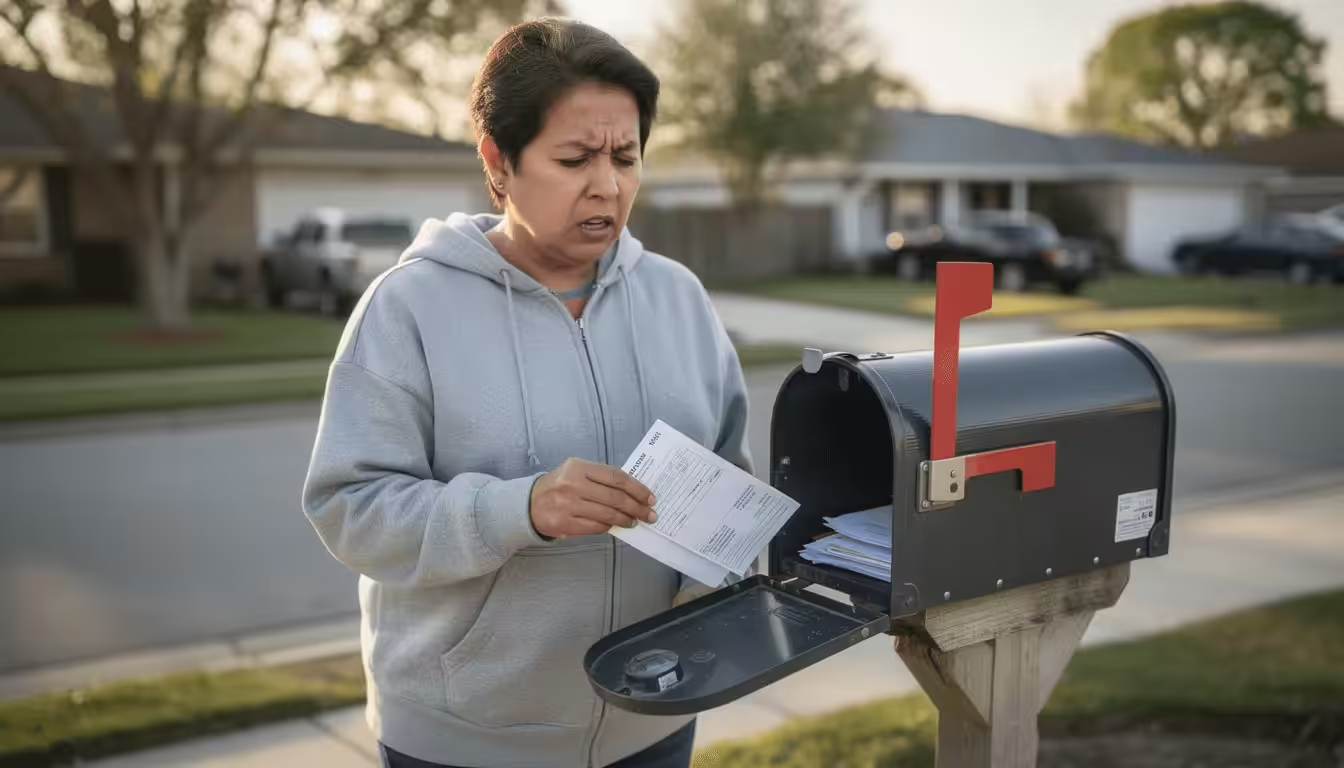
This timing gap means damage can occur before you even notice the letter sitting in your mailbox or hear the voicemail on your phone. By the time you’re aware of the situation, your credit score may already reflect the negative information reported.
The practical takeaway? You cannot rely on collectors to provide advance warning of reporting. Proactively monitoring your credit reports regularly is your best defense against surprise collections tanking your score.
What Exactly Is a Collection Account and How Does It Get Reported?
A collection account is a debt that a creditor has charged off and either assigned or sold to a third-party collection agency. When the original creditor gives up trying to collect payment directly, they typically transfer the account to specialists whose entire business model revolves around recovering unpaid debt.
The typical timeline looks like this:
- 30 days late: First late payment reported to bureaus
- 60 days late: Second late payment, score impact increases
- 90 days late: Account flagged as seriously delinquent
- 120-180 days late: Creditor charges off the account and places it with a collector
The exact timing varies based on the type of credit. Credit card companies often charge off around 180 days, while installment loans may follow different schedules.
The original delinquency date—the date of the first missed payment that was never brought current—controls the seven-year reporting period. This date matters enormously because it determines when the collection will finally fall off your report.
Common debts that show up in collections:
- Credit cards and personal loans
- Auto loans (including deficiency balances after repossession)
- Medical bills from hospitals, clinics, and medical office visits
- Cell phone and internet accounts
- Utility bills
- Unpaid rental balances
Some creditors report through their own internal collections departments, while in other cases only the third-party debt collection agency will appear on your report. Either the original creditor or the collector may report—or both might show separate negative entries.
Once placed with a collector, the debt may be reported to one, two, or all three bureaus. The same collection might not appear on every credit report, which is why checking all three bureau reports matters.
Collectors are considered “furnishers” of information under the FCRA. This means they’re bound by duties of accuracy, dispute investigation, and timely updates. When they report inaccurate information, you have legal recourse.
How Collections Influence Different Credit Scoring Models
Not all credit scores treat collections the same way. This explains why consumers sometimes see different score changes from the same account across different scoring platforms.
Payment history is the largest factor in FICO scores, accounting for about 35% of your total score. Any reported collection is treated as a serious derogatory event—a clear signal that you failed to meet your obligations to a creditor.
Here’s where it gets complicated: different scoring models handle collections differently.
Older FICO models (FICO 2, 4, 5):
- Often still used in mortgage and auto lending
- Count both paid and unpaid collections as negative items
- Even settling a debt may not improve your score under these models
Newer FICO 9 and FICO 10 models:
- Ignore fully paid collections entirely
- Weight medical collections less heavily than other debts
- Provide better treatment for consumers who resolve their obligations
VantageScore 3.0 and 4.0:
- De-emphasize or ignore fully paid collections
- Particularly lenient on medical collections once the balance reaches zero
- May show score improvements faster after paying off collections
Several factors influence how severe your score drop will be:
- Recency: Newer collections hurt more than older ones
- Balance amount: Larger debts may carry more weight
- Number of accounts: Multiple collections compound the damage
- Overall credit history: A single collection on an otherwise clean report hurts more proportionally
If you’re planning a home purchase within 12-24 months, understand that mortgage lenders often rely on older FICO versions. Even a paid collection might still hurt your mortgage application score, even though newer models would ignore it. A medical collection that VantageScore 4.0 treats as a zero balance non-factor might still be counted by the FICO 8 model your mortgage lender uses.
Legal Rules: Reporting Requirements and Verification Obligations
Two key federal laws govern what collectors can report and how: the Fair Credit Reporting Act (FCRA) and the Fair Debt Collection Practices Act (FDCPA). Understanding these laws is essential for protecting your credit history.
FCRA Obligations for Collectors as Furnishers
Under the FCRA, collectors who report to credit bureaus must:
- Report only accurate information
- Correct and update information promptly when errors are identified
- Not report information they know (or reasonably should know) is incorrect
- Conduct a “reasonable investigation” when consumers dispute reported items
When you dispute a collection with a bureau, the collector must investigate and report back. If they cannot verify the debt, they must have the bureau delete or modify the entry. This verification process is one of your strongest tools for removing inaccurate or unverifiable accounts.
FDCPA Verification Requirements
The FDCPA requires collectors to:
- Send a written validation notice within five days of first contact
- Provide the amount owed and the name of the original creditor
- Inform you of your right to dispute and request verification
- Stop certain collection activities if you dispute in writing within 30 days
After you send a written dispute, collectors must pause collection efforts until they provide verification. Sending a debt validation letter via certified mail creates a paper trail that protects you.
While the FDCPA doesn’t explicitly forbid reporting during the 30-day window, reporting unverified information or failing to mark a disputed account as such can raise both FCRA and FDCPA issues.
Collectors must mark accounts as “disputed” when they know you contest the debt. This notation can affect how lenders interpret that trade line when reviewing your application manually.
Best practice: Send disputes by certified mail and keep copies of everything. Document timelines meticulously so you can hold collectors to their legal duties if violations occur.
What Kinds of Debts Can Go to Collections and Show Up on Your Credit?
Almost any unpaid consumer debt can be sent to a collector and, if reported, can appear on your credit report. The range is broader than many people realize.
Major categories of debts that commonly go to collections:
| Debt Type | Common Sources | Notes |
|---|---|---|
| Credit cards | Banks, credit unions | Often sold to buyers after charge-off |
| Personal loans | Banks, online lenders | May include installment and signature loans |
| Auto loans | Dealerships, banks | Includes deficiency after repossession |
| Mortgages | Banks, servicers | Deficiency balances after foreclosure |
| Medical bills | Hospitals, doctors, labs | Subject to special reporting rules |
| Utilities | Electric, gas, water companies | Often sold to collection agencies |
| Cell phone/internet | Carriers, providers | Frequently reported for unpaid balances |
| Rental balances | Landlords, property managers | Broken leases, unpaid rent |
For secured debts like auto loans and mortgages, the lender may repossess or foreclose first. Any remaining balance after the sale of collateral can then be sent to collections as a deficiency balance.
Federal student loans follow different servicing and collection rules, but defaulted federal loans can still be reported as derogatory tradelines or collections. Private student loans are handled more like other consumer debt.
Recent credit bureau policies treat small-dollar medical debts differently. As of the mid-2020s, some unpaid medical collections under specified thresholds may not be reported at all. However, don’t assume a debt “won’t be reported” just because it’s small or from a medical provider—policies change, and practices vary by bureau and collector.

What Happens Step-by-Step When Your Account Goes Into Collections?
Understanding the typical progression from late payment to charge-off to collection activity helps you recognize warning signs and respond appropriately.
Step 1: Late Payments Accumulate After several missed payments—usually 90 to 180 days—the original creditor decides you’re unlikely to pay voluntarily. Your credit report already shows past due accounts at this point, damaging your score incrementally with each reporting cycle.
Step 2: Charge-Off and Placement The original creditor either assigns the account to a collection agency (keeping ownership) or sells it outright (transferring ownership). Either way, a new entity now handles collection efforts.
Step 3: Initial Contact and Validation Notice The collection agency begins outreach through personal calls, letters, and sometimes emails. Within five days of first contact, they must send a written notice explaining:
- The amount owed
- The original creditor’s name
- Your dispute rights
Step 4: Verification and Response You should verify the collector’s identity and the debt details—amount, account number, date of last payment—against your own records and your credit report. If anything seems off, dispute it immediately in writing.
Step 5: Credit Bureau Reporting Reporting can happen soon after placement, sometimes before or around the time you receive the first letter. The collector’s practices determine timing, not a universal rule.
Step 6: Separate Credit Report Entry Once reported, the collection appears as a separate negative line item. This is in addition to any prior late payments from the original creditor, meaning you may see both the original account’s delinquency history and the new collection account.
Step 7: Dispute and Investigation (If Applicable) If you dispute the debt promptly and in writing, the collector must pause certain activities and investigate. Unverifiable or fraudulent accounts should be removed from your reports entirely.
How Long Do Collections Stay on Your Credit Report?
Collections can remain on credit reports for up to seven years from the original delinquency date under the FCRA. This timeframe is set by law and applies regardless of whether you eventually pay the debt.
The seven-year clock starts with the first missed payment that led to the charge-off and collection—not the date the collection agency acquired the debt or updated the account status.
Concrete example: If your first missed payment was in October 2022 and the account never became current, the collection should fall off around October 2029. This remains true even if the same debt was sold to multiple collectors in between, each one contacting you about the money you owe.
Selling the debt to another collector does not “restart” the seven-year reporting period. Re-aging a debt to extend reporting violates the FCRA.
While the account may remain visible on your report for the full seven years, its impact on scores typically fades with age. After years 2-3, if no new negatives appear and you’re building positive credit history, the older collection’s influence diminishes substantially.
Action item: Check old collection dates carefully and dispute any that appear to have been re-dated in a way that unlawfully extends their reporting period. This is a violation of your rights, and the entry should be corrected or removed.
Does Paying Off or Settling a Collection Help Your Credit Score?
Paying a collection often helps your overall credit health and borrowing prospects, but the exact score impact depends on the scoring model used and the age and type of debt involved.
Even after payment, the collection may stay on your credit report until the seven-year period ends. However, it should be updated to show a zero balance and “paid” or “settled” status—marked as a paid collection rather than an active obligation.
How different scoring models treat paid collections:
- Newer FICO 9/10 and VantageScore models: May ignore fully paid collections entirely, leading to meaningful score improvements, especially for recent accounts
- Older FICO models: May still treat paid collections as negative, limiting score improvement in mortgage and auto lending contexts
If the collection is the only negative item on an otherwise clean credit history, paying it off could have a significant positive effect under newer models. If you have multiple collections or extensive other negatives, paying one may produce more modest results.
Non-score benefits of paying collections:
- Stops collection calls and contact attempts
- Reduces legal risk (wage garnishment, lawsuits)
- Improves manual lender review outcomes, since underwriters look beyond raw scores
- Eliminates the stress of dealing with a collector
Some consumers negotiate “pay for delete” arrangements where the collector agrees to request deletion upon payment. This isn’t legally required, and not all collectors will agree. If you pursue this route, get the agreement in writing before sending any money.
Align your payoff strategy with specific goals. If you’re preparing for a mortgage in 12 months, prioritize differently than if you’re focused on long-term rebuilding. A credit counselor can help you develop a strategy that makes sense for your situation.
What Are Your Rights When Dealing With Debt Collectors?
Consumers have strong federal protections under the FDCPA and FCRA, plus additional rights under many state laws. Knowing these rights empowers you to push back against unfair collection practices.
Key FDCPA Protections
| Protection | What It Means |
|---|---|
| Time restrictions | No calls before 8 a.m. or after 9 p.m. local time |
| No harassment | Collectors cannot threaten, use profanity, or call repeatedly to annoy |
| Employment limits | Significant restrictions on contacting your employer |
| Third-party privacy | Cannot discuss your debt with most third parties |
| Validation notice | Must send written notice within 5 days of first contact |
| Dispute rights | 30 days to dispute in writing and request verification |
Once you dispute in writing, the collector must cease certain collection efforts until they provide verification. They must also report the debt as disputed if they continue furnishing information to bureaus.
FCRA Rights
Under the FCRA, you have the right to:
- Accurate credit reporting of all information
- Dispute inaccurate, incomplete, or unverifiable information with bureaus
- Request investigation of disputed items
- Have unverifiable information removed from your reports
- Sue collectors and bureaus that violate your rights
If you believe a collector has violated your rights, you can file complaints with:
- (CFPB)
- Federal Trade Commission (FTC)
- Your state attorney general’s office
Documentation matters. Keep detailed records of all interactions:
- Dates and times of calls
- Names of representatives you speak with
- Copies of all letters sent and received
- Notes about what was said during conversations
- Certified mail receipts for disputes
This documentation supports disputes, complaints, and potential legal action if collectors cross the line. Identity theft victims should be especially diligent about documenting everything, as they may need to prove fraud occurred.

Strategies to Protect Your Credit Before and After a Collection Hits
Taking practical, action-oriented steps can minimize damage or accelerate recovery after a collection appears. Here’s what you can do right now.
Before a Collection Hits
Open and read all mail. Particularly watch for letters from unknown finance companies or law firms. These may be validation notices or pre-suit letters. A debt collector can’t negatively affect your credit if you catch problems early and respond appropriately.
Contact original creditors early. Once you’re 30 or 60 days late, reach out to explore hardship programs, forbearance, or payment plan options. Preventing charge-off and collection is far easier than cleaning up afterward.
Set up autopay and reminders. Automated payments on essential accounts—rent, utilities, credit cards—prevent accidental delinquencies that could snowball into collections. Even a bank account with automatic minimum payments provides protection.
After a Collection Hits
Request written agreements before paying. Before sending money to any collector, get documentation of:
- The exact amount they’ll accept
- How the account will be reported once paid
- Whether they’ll request deletion (if they agree to “pay for delete”)
Dispute inaccurate information promptly. If anything on the collection account is wrong—amount, dates, your social security number, anything—dispute it with both the bureau and the collector in writing.
Check credit reports regularly. Use AnnualCreditReport.com for free annual reports from all three bureaus. Consider reputable monitoring tools to catch new collection accounts quickly. The faster you identify problems, the faster you can respond.
Consider secured credit cards for rebuilding. After collections damage your score, secured credit cards offer a path to rebuild. Make small purchases, pay the balance in full, and demonstrate positive payment history over time.
Seek professional help when needed. If you’re dealing with multiple collections, lawsuits, or suspected reporting violations, consult a nonprofit credit counselor or consumer attorney. They can help you navigate complex situations and protect your rights.
Credit repair after debt collection is a marathon, not a sprint. Meaningful improvement requires sustained effort over an extended period.
Key Takeaways: Managing Collections and Protecting Your Credit Score
Managing collections effectively requires understanding both the rules collectors must follow and the actions you can take to protect yourself.
- Collections can significantly impact your credit score once reported to bureaus, with the most severe damage occurring in the first 24 months. Payment history accounts for about 35% of your FICO score, making any collection a serious derogatory mark.
- Collectors are not required to warn you before reporting. While they must send a validation notice within five days of first contact, this isn’t a credit reporting warning. Monitoring your credit reports is essential because you cannot rely on advance notice.
- Collections stay on your credit for up to seven years from the original delinquency date—the first missed payment that was never brought current. The impact fades over time and may be reduced or ignored by newer scoring models, especially once the debt is paid.
- You have strong legal rights under the FDCPA and FCRA. You can dispute debts, demand verification, and challenge inaccurate or re-aged accounts. Collectors must comply with these laws when collecting and reporting.
- Paying off collections helps in most cases, though the exact score benefit depends on the scoring model and debt age. Non-score benefits include stopping collection calls, reducing legal risk, and improving manual underwriting reviews.
- Proactive action is your best protection. Respond quickly to collection notices, learn your rights, negotiate strategically, and build positive new credit history to outgrow past damage.
Don’t wait for a collection to surprise you. Check your credit reports today at AnnualCreditReport.com, respond to any collection notices promptly, and take control of your financial future. The damage from collections can be significant, but with the right knowledge and timely action, you can minimize the impact and rebuild stronger than before.